A memory layer for the AI tools you already use
Your AI forgets.
Edwin remembers, and shows its work.
Edwin remembers what you've told your AI — when it was true, why you decided it, and what's actually been checked. It works with Claude and any MCP-compatible AI tool.
Edwin answers from about 0.3% of the tokens of pasting your whole history in, at the same overall accuracy. That's about 125× cheaper per question.
Self-run on the STALE benchmark, Aug 2026 · See the measurement
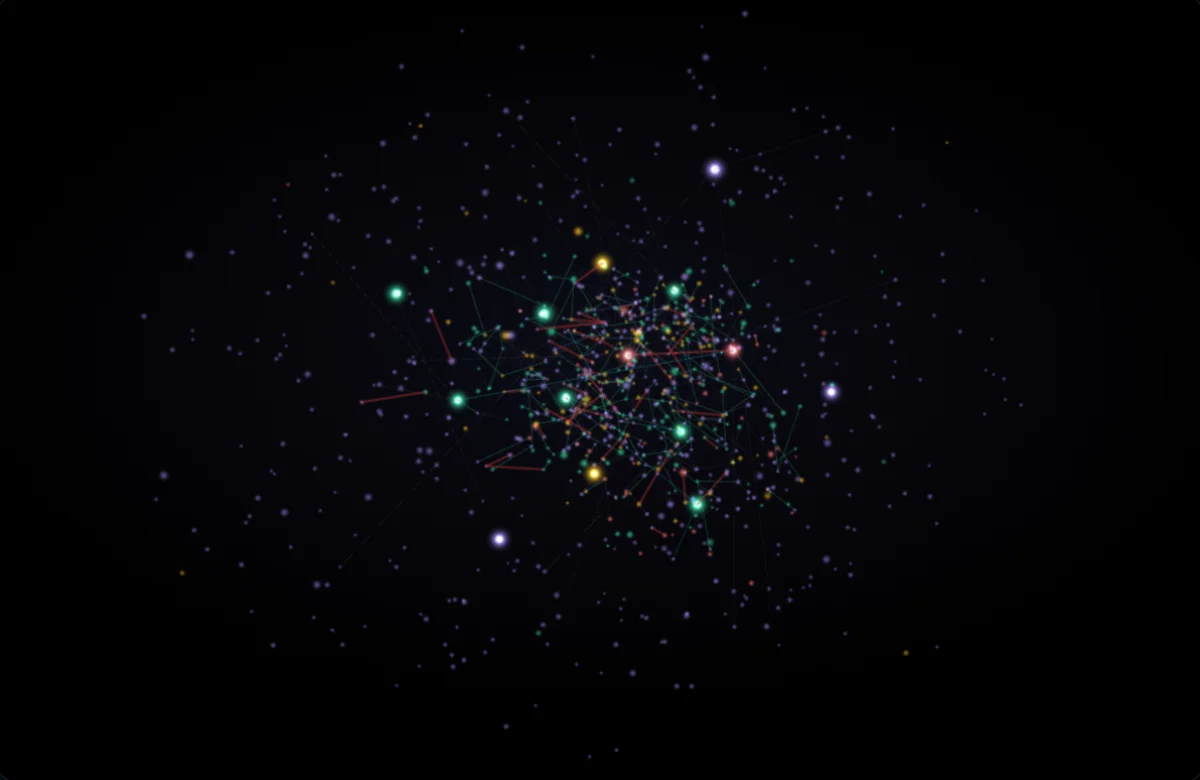
Demo with fictional memories · what the colors mean
- Survived challenge
- Not confirmed
- Disputed
- Not yet challenged
You've explained it before. Your AI just doesn't remember.
It forgets
Every new chat starts from zero. You re-explain the same project, the same people and the same decisions, again and again.
It contradicts itself
Tell it the budget is $500K on Monday and $750K on Thursday, and you may get either answer back, with no sign of which one is current.
It can't show its work
Ask whether something is still true and you get a confident answer, with no date, no reason and no sign that anyone checked it.
Edwin fixes the memory underneath. Here's the difference when a number changes:
Memory you can trust, in six ways
Each one links to the record behind it.
It knows when things were true.
Every fact is saved with the date it was true. When the budget moves from $500K to $750K, Edwin records an update, not an error, and keeps the old figure on record with its date.
STALE benchmark, pre-registered, Oct 2026 · See the experiment
It remembers why you decided.
Decisions are saved with the reasoning that led to them. Six months later you can ask why the scope was cut, not just that it was.
It tells you what's been checked.
A second AI provider challenges facts in the background, and every memory carries a plain label: Survived challenge, Not confirmed, Disputed or Not yet challenged. You always know what's been checked.
Pre-registered, Oct 2026 · See the measurement
- Survived challengeA second provider tried to dispute it and did not
- Not confirmedChallenged, but fell short of the bar
- DisputedThe providers that challenged it disagree
- Not yet challengedNo second provider has challenged it yet
It catches contradictions without crying wolf.
When two facts genuinely conflict, like two launch dates from the same meeting, Edwin flags the pair and keeps both. A contradiction only counts when two different AI providers agree or you confirm it.
Internal test, Apr 2026 · See the research
Neither is newer, so this is a real conflict, not an update.
It costs a fraction to ask.
Instead of pasting your whole history into every chat, your AI pulls only the memories a question needs. Edwin reads your history once; you don't pay to re-read it on every question.
Self-run on the STALE benchmark, Aug 2026 · See the measurement
It's yours.
Your memory is a SQLite file on your own Mac, with encrypted nightly backups. It works with Claude and any MCP-compatible AI client, so switching assistants doesn't mean starting over.
Local-first · Where your data goes
How it works
No new app to learn. Edwin sits underneath the AI tools you already use.
Connect
Edwin plugs into Claude and other MCP-compatible AI tools, and picks up your Otter.ai meeting exports.
Date, link and check
Each fact is saved with the date it was true, linked to related facts and decisions, and challenged in the background by a second AI provider.
Ask
Your AI pulls just the memories a question needs instead of re-reading your whole history. Old values stay on record with their dates.
For developers: a memory layer you can inspect
Plain files, an open protocol, and providers you can name.
A SQLite file you own
The whole store is one SQLite file on your Mac. Copy it, back it up, or query it with any SQLite tool.
Speaks MCP
Claude and any other MCP-compatible client can read memories and save new notes through Edwin's MCP server.
A dated, linked graph
Facts carry the date they were true, decisions link to the facts behind them, and replaced values stay on record.
More than one provider
Facts are read by one AI provider and challenged in the background by a different one. Edwin works with Venice, Google Gemini and Anthropic.
Encrypted backups
AES-256 encrypted backups go to your iCloud Drive every night, under a key you hold.
What it takes in
Otter.ai meeting exports, picked up from a folder, and the notes your AI clients save over MCP.
Local-first, not local-only. Your memory lives on your Mac. To extract and check facts, Edwin sends text to AI providers (Venice, Google Gemini and Anthropic), and encrypted backups go to your iCloud Drive. What leaves your Mac
Built to be checked. The record is public.
We publish our full measurement record, including what didn't work, because memory you rely on should be measured in public.
Built by Alexander Snyder

Alexander Snyder
Inventor of Edwin
I built Edwin because I watched AI assistants confidently store wrong information, and I wanted a memory I could check, keep on my own machine, and take to any assistant.
Your memory should belong to you, and every claim about it should be something you can check. That's why the results on this page link to the full measurement record.
Questions
Short answers, with links to the detail.
What is Edwin?
Edwin is a memory layer for the AI tools you already use. It remembers what you've told your AI — when each fact was true, why you made each decision, and what's been checked — and serves it to Claude or any MCP-compatible client. Your memory is a SQLite file on your own Mac.
Who is it for?
People who use AI tools every day and are tired of re-explaining themselves, developers who want a memory layer they can inspect and query, and anyone who needs to know why a decision was made, not just what was decided.
Why not just paste everything into the chat?
Because you pay for every token, on every question. In our STALE benchmark run, Edwin answered from about 0.3% of the tokens at the same overall accuracy: about 125× cheaper per question, with setup paying for itself after about 3 questions (self-run, Aug 2026). See the measurement
How do I know what's been checked?
A second AI provider challenges facts in the background, and every memory carries a label: Survived challenge, Not confirmed, Disputed, or Not yet challenged. Checking facts and showing the AI those labels raised accuracy 5.8 points on the STALE benchmark (pre-registered, Oct 2026). See the measurement
What happens when two facts disagree?
If one is newer, Edwin records it as an update and keeps the old value with its date. If two facts genuinely conflict, Edwin flags the pair and keeps both; it only counts as a contradiction when two different AI providers agree or you confirm it. In our internal test it caught 68 of 100 real contradictions with zero false alarms.
How is Edwin different from other AI memory tools?
Edwin stores when each fact was true, the reasoning behind each decision, and a label for what's been checked. Of the three memory products we checked on October 3, 2026, none documents a separate decision type. See the research
Where does my data live?
Your memory is a SQLite file on your own Mac, with encrypted nightly backups to your iCloud Drive. To extract and check facts, Edwin sends text to AI providers: Venice, Google Gemini and Anthropic. What leaves your Mac
When can I use Edwin?
Edwin is in private development. Email alexander@purviewx.ai and we'll tell you when it opens.
Give your AI a memory you can check.
Edwin is in private development. Email us and we'll tell you when it opens.